

Most Seattle drivers would probably guess January.
After all, winter brings dark commutes, heavy rain, occasional snow, and the kind of slick road conditions that make even short trips feel unpredictable. If any month seems destined to lead the city in crashes, it would be the middle of winter.
But Seattle’s crash data tells a different story.
An analysis of reportable collision data from 2011 through 2025 from the Washington State Department of Transportation (WDOT) shows that October—not January, February, or December—consistently records more crashes than any other month.
The findings challenge a common assumption about driving risk in the Emerald City and reveal that some of Seattle’s most dangerous driving conditions may arrive long before winter does.
Table of Contents
Toggle
October Records the Most Crashes in Seattle
Between 2011 and 2025, October averaged approximately 1,023 reportable crashes per year, the highest total of any month. That result may come as a surprise to many local drivers. October is rarely associated with severe winter weather, and most people aren’t thinking about icy roads or snow-covered highways.
Yet October marks a major seasonal transition across Seattle.
Summer vacations have ended. Schools and universities are fully back in session. Traffic patterns become more predictable but yet more congested. Meanwhile, daylight hours begin disappearing quickly, and the city starts seeing the return of the steady rainfall that defines much of the Pacific Northwest.
Anyone who has lived in Seattle long enough knows that the first few weeks of autumn can create challenging driving conditions. Roads that have been relatively dry for months suddenly become wet again, and commuters find themselves driving in darker conditions during both morning and evening rush hour.
While crash statistics alone cannot determine exactly why October leads the year in collisions, the timing is difficult to ignore.
February Has the Fewest Crashes
At the opposite end of the spectrum is February.
Over the same 15-year period, February averaged roughly 799 reportable crashes annually, making it Seattle’s lowest-crash month.
In practical terms, October experiences about 28% more crashes than February.
That’s especially interesting because February falls squarely within the period many people consider Seattle’s most difficult driving season.
The numbers suggest that bad weather does not automatically translate into more crashes. In fact, when conditions are obviously poor, drivers may become more cautious. People often reduce their speed, postpone unnecessary trips, and pay closer attention to changing road conditions.
Seattle Crash Rankings by Month
Historical averages from 2011 through 2025 show the following pattern:
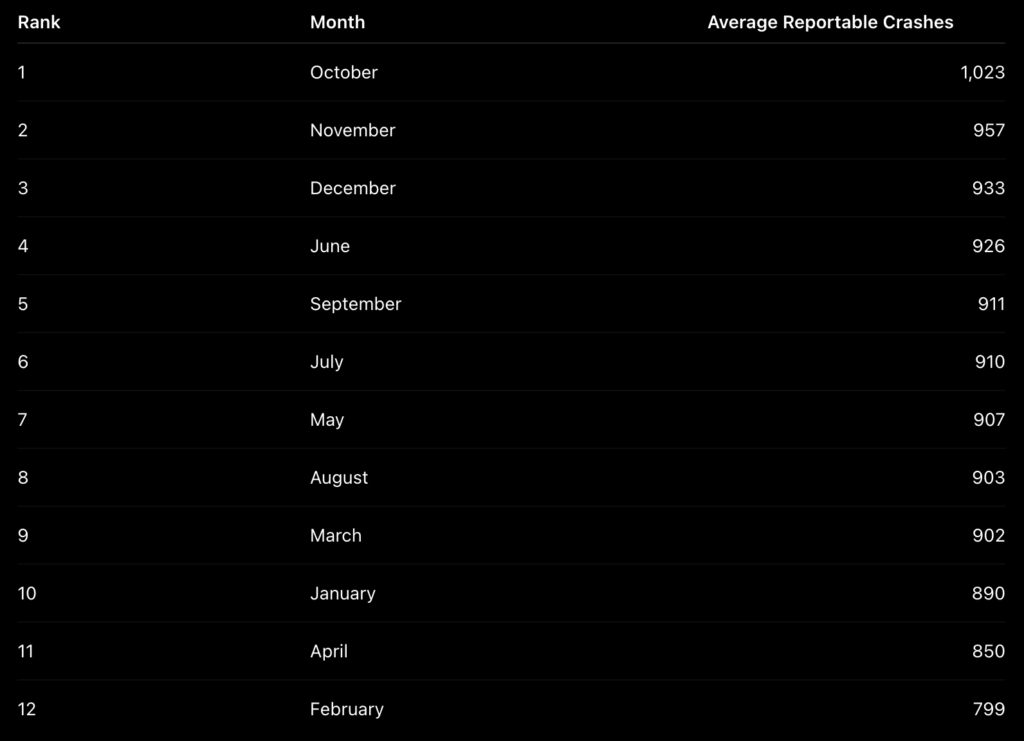
One notable takeaway is that the fall months dominate the top of the list. October, November, and December all rank among Seattle’s busiest months for crashes.
Why Fall May Be More Dangerous Than Drivers Realize
Many Seattle residents spend the winter preparing for hazardous road conditions, but the data suggests that fall deserves just as much attention.
Several factors may contribute to the increase in crashes during October and November:
- Shorter daylight hours
- Increased rainfall after the dry summer season
- Heavier commuter traffic following summer vacations
- School-related traffic throughout the region
- Drivers adjusting to changing weather and road conditions
No single factor fully explains the trend. However, together they help paint a picture of why collision totals begin climbing as Seattle transitions from summer into fall.
What Seattle Drivers Can Learn From the Data
No month is completely safe, and no season is free from serious crashes.
Still, long-term crash trends can reveal patterns that are easy to overlook in day-to-day driving. While winter often gets the most attention, Seattle’s collision data shows that the greatest crash risk historically occurs during the fall.
For local drivers, the lesson is simple: don’t wait for snow or ice to become extra cautious behind the wheel.
The months that feel routine may be the ones that deserve the most attention.
Injured in a Seattle Car Accident?
Even the most careful drivers cannot control the actions of others. If you were injured in a crash caused by a negligent driver, understanding your legal options is an important first step.
The Seattle personal injury attorneys at The Advocates have spent more than 35 years helping accident victims pursue compensation for medical expenses, lost wages, pain and suffering, and other damages. Contact our team today for a free consultation and learn how we may be able to help with your case.