



Every day, drivers across Washington unknowingly navigate roads, bridges, and highways that are overdue for crucial maintenance. These silent dangers, often overlooked, create serious risks for commuters and travelers alike. Consider the following statistics:
- 59% of Washington’s lane miles are overdue, with many far past due, for preservation and maintenance.
- There are currently 159 concrete bridge decks in need of repairs, yet only 24 of these projects were scheduled for completion in 2023.
- The Washington State Department of Transportation (WSDOT) can only pave about 920 lane miles annually, which is less than one-third of what’s actually required to maintain safe road conditions.
Despite historic funding levels from both state and federal sources, much of the available money is being funneled into new construction projects, leaving the preservation of existing infrastructure—like the ferry system, roads, and bridges—severely underfunded.
These issues highlight the critical need for prioritizing maintenance and ensuring the safety of those who rely on these essential networks.
What Is Highway Neglect?
Highway neglect refers to the deterioration of major roadways due to insufficient maintenance, oversight, or failure to address routine wear and tear. This term encompasses a wide range of infrastructural issues, such as:
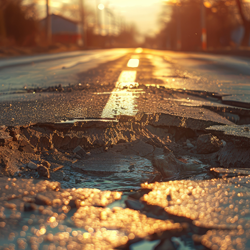
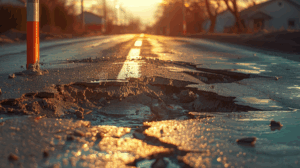
- Cracks and potholes that jeopardize vehicle safety.
- Weak or unstable barriers that fail to protect drivers in accidents.
- Inadequate or unsafe shoulder areas for emergency stops.
Such conditions not only endanger drivers but also contribute to frequent auto accidents. Highway neglect often stems from funding allocations that prioritize new projects over the preservation of existing infrastructure. These decisions can be influenced by political considerations, leaving critical hazards unresolved for extended periods.
Washington State Highways: A System in Decline
The challenges facing Washington’s transportation infrastructure are especially evident in its highway system. Aging equipment, deteriorating facilities, and insufficient maintenance funding have created a precarious situation. The following statistics, drawn from WSDOT’s analysis, reveal the dire condition of the state’s highways:
- 29% of WSDOT’s equipment has exceeded its useful lifespan, and 35% is rated in “poor condition.”
- 40% of WSDOT facilities are over 51 years old, with 94% expected to reach or surpass this age within two decades.
- Maintenance activities received troubling ratings: 17 out of 30 were graded at a “C” or below.
- The highway system requires an estimated $1.5 billion annually to achieve a “State of Good Repair.”
- Highway preservation funding has not kept pace with inflation, showing a decline compared to 2001 levels.
This data, sourced from a WSDOT presentation by State Maintenance Engineer Pasco Bakotich III, underscores the systemic neglect and underfunding that threaten the reliability and safety of Washington’s highways. While infrastructure such as snow plows and surveying tools deteriorates, the pressing need for modernization is evident—not only in equipment but also in maintenance facilities.
What Is Reckless Road Design?
Reckless road design refers to the creation or maintenance of roadways that fail to prioritize driver and pedestrian safety, often leading to hazardous conditions and increased accident risks. These design flaws can arise from inadequate planning, poor execution, or failure to address evolving safety standards. Examples of reckless road design include:
- Insufficient Signage: Missing or unclear warnings about safe speeds, upcoming curves, or potential hazards.
- Faulty Traffic Controls: Defective stoplights, absent stop signs, or poorly marked lanes that confuse drivers.
- Lack of Guardrails: Absence of barriers to prevent vehicles from leaving the roadway in dangerous areas.
- Obstructed Visibility: Overgrown vegetation or poorly planned construction that limits a driver’s view of the road ahead.
- Hazardous Road Shoulders: Sudden drop-offs that prevent safe re-entry onto the roadway after veering off.
- Improper Maintenance Residues: Excessive oil or gravel left from resurfacing or road work procedures, creating slippery or unstable surfaces.
- Unmarked Dangers: Failure to alert drivers to hazards like potholes, pooling water, or active construction zones.
Other road defects, such as narrow lanes, inadequate cross slopes for water drainage, poorly maintained medians, or unsafe road margins, further exacerbate the risks. These issues can reduce visibility, limit maneuverability, and create unpredictable driving conditions, all of which can lead to severe accidents. Addressing these shortcomings requires proactive design, regular maintenance, and clear accountability for road safety.
Real Cases Highlighting Road Hazards in Washington
Case 1: Overgrown Bushes Obstructing Visibility
In Washington, neglected vegetation can lead to serious accidents. For instance, overgrown blackberry bushes obstructed the view of an off-duty police officer. Despite stopping at the designated stop sign bar, she couldn’t see an approaching motorcycle, leading to a devastating collision.
Case 2: Barrier Failure with Tragic Consequences
In 2013, Ms. Seward was a passenger in a car that lost control and struck an overpass pillar. The crash could have been prevented by a proper safety barrier, but the car hit an outdated earth berm installed by WSDOT. After years of litigation, WSDOT admitted fault and agreed to a $28 million settlement to cover Ms. Seward’s lifelong care. This case highlights the grave risks of failing to maintain road safety.
Federal Roadways and Pedestrian Fatalities
A significant majority of pedestrian fatalities in the United States occur on federally funded roads. From 2003 to 2012, 68% of all pedestrian fatalities nationwide took place on roadways partially funded and designed following federal guidelines.
Speed Limits and Pedestrian Safety
Speed plays a critical role in the severity of crashes, particularly those involving pedestrians. Higher speed limits increase the likelihood of fatal outcomes, emphasizing the importance of enforcing and reviewing speed regulations.
- In Washington:
- 45.4% of pedestrian fatalities occurred on roads with speed limits of 40 mph or higher.
Only 12.5% occurred on streets with speed limits of 30 mph or lower.
- 45.4% of pedestrian fatalities occurred on roads with speed limits of 40 mph or higher.
- National Statistics:
- 61.3% of pedestrian fatalities happened on roads with speed limits of 40 mph or higher.
Just 9% occurred on streets with a speed limit of 30 mph or lower.
- 61.3% of pedestrian fatalities happened on roads with speed limits of 40 mph or higher.
Liability for Hazardous Roads
Why wasn’t there adequate lighting on the poorly marked curve? Why are drivers repeatedly swerving to avoid an unmarked pothole in a high-speed area? These scenarios highlight potential negligence in addressing dangerous road conditions.
Liability for such hazards isn’t restricted to accidents or injuries. Even if no immediate harm occurs, individuals may have grounds for legal action if they can establish two key factors:
- Government Awareness: The relevant government agency was informed of the dangerous condition.
- Failure to Act: Despite having sufficient time to resolve the issue, the agency failed to implement necessary repairs or precautions.
Demonstrating negligence requires evidence that the hazard posed a foreseeable danger and that reasonable actions to reduce the risk were not taken. Holding agencies accountable ensures they prioritize maintaining safe roadways.