


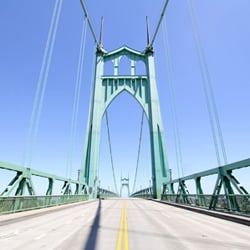

Across the United States, approximately 1 in 10 roads are in poor condition, and urban areas fare even worse, with 1 in 5 roads deemed inadequate. States like California and Rhode Island are the worst-ranked for road roughness, with 44% and 41% of their roads in poor condition, respectively. On the other hand, New Hampshire and Alabama boast the best-maintained roads, despite spending significantly less per mile than other states. In Oregon, however, the condition of roads and bridges highlights an urgent need for attention and investment.
A Troubling Landscape
In Oregon, 14% of roads are classified as being in poor condition, while only 51% are considered to be in good condition. Drivers face increased costs and risks daily due to this neglect. Commute times in Oregon have risen by 7% since 2011, and the average driver pays $256 annually for vehicle repairs caused by poorly maintained roads. Beyond personal inconvenience, deteriorating infrastructure has broader implications for the state’s economy and safety.
The Federal Investment and Oregon’s Needs
In 2021, the federal government launched a billion-dollar infrastructure plan that included addressing Oregon’s crumbling roads and bridges. The initial assessment revealed critical issues:
- Roads and Bridges: Oregon has 395 bridges and over 1,287 miles of highways in poor condition.
- Public Transit: Many Oregonians relying on public transportation face outdated systems, with 19% of transit vehicles past their useful life. Non-white households are 1.8 times more likely to depend on these services.
- Extreme Weather: Between 2010 and 2020, Oregon endured 12 extreme weather events, incurring up to $5 billion in damages, further straining the state’s infrastructure.
Insufficient County Budgets
Oregon’s counties, responsible for nearly 27,000 miles of roads and 3,400 bridges, require over $800 million more annually to maintain existing infrastructure. Meanwhile, the Oregon Department of Transportation estimates it needs an additional $1.8 billion annually just to keep up with maintenance demands. With most county bridges built in the 1950s and 1960s, many are now unsuitable for heavy trucks, posing significant challenges for agriculture and wildfire response.
Bridges: A Looming Challenge
Oregon’s 8,292 bridges are aging rapidly, with 22% rated in poor or near-poor condition. At the current rate of replacement, civil engineers estimate that some bridges would need to last 900 years—far exceeding their typical lifespan of 75–100 years. Many of these structures are vital for commerce and public safety, yet they remain in disrepair, jeopardizing both economic productivity and public safety.
Road Design and Neglect: Hidden Dangers
Poorly maintained roads and reckless design contribute to dangerous conditions for drivers and pedestrians alike. Examples include:
- Cracks, potholes, and unstable shoulders.
- Inadequate signage or traffic controls.
- Faulty barriers and poor visibility due to overgrown vegetation.
These issues reduce visibility, limit maneuverability, and increase accident risks. Neglect often stems from prioritizing new projects over maintaining existing infrastructure, leaving hazards unaddressed for years.
Pedestrian Safety
Nationally, pedestrian fatalities are disproportionately high on federally funded roadways, with 68% occurring on such routes between 2003 and 2012. Speed limits are a critical factor:
- 61.3% of pedestrian fatalities occur on roads with speed limits of 40 mph or higher.
- Only 9% occur on roads with speed limits of 30 mph or lower.
Economic and Social Consequences
The neglect of Oregon’s roads and bridges carries significant economic ramifications. A recent study predicted that if infrastructure conditions do not improve, the state could lose $94 billion in cumulative GDP by 2035, along with 100,000 potential jobs. Additionally, the strain on transportation costs directly impacts Oregonians’ quality of life.
Portland’s Pothole “Culture”
Creative Responses to Infrastructure Gaps in Portland
In Portland, some residents have taken an unorthodox approach to highlighting infrastructure issues—particularly potholes—by turning them into public canvases. In one well-known 2014 case, an individual painted designs around a pothole at NE 67th and Pacific, drawing attention to the hazard in hopes of prompting quicker city response. While technically considered vandalism, these acts also serve as a striking reminder of the public’s growing frustration with delayed road maintenance.
Grassroots Repair Initiatives: Portland Anarchist Road Care
Frustrated by ongoing delays, a volunteer group known as Portland Anarchist Road Care (PARC) began independently filling potholes across the city in 2017. Operating without formal authorization, PARC’s mission is to show that community-driven action can address immediate concerns—even in the absence of municipal intervention.